

























![Persona 2 - Innocent Sin [En by Gemini v1.0a]](https://res.classicgames.app/game-thumbnail/persona-2-innocent-sin-thumbnail.webp)
Overview
Classic Play Profile
Persona 2 - Eternal Punishment is the direct sequel and counterpart to Persona 2: Innocent Sin, forming the second half of a complex, adult-themed duology. This PlayStation RPG shifts perspective to follow journalist Maya Amano and adults working at a detective agency, delving deeper into a distorted modern-day Sumaru City where rumors can become terrifying reality. It expands the unique Persona and demon negotiation systems, weaving a darker, more mature story of consequences and personal duty within the Persona mythos.
Persona 2 - Eternal Punishment is a PlayStation role-playing game centered on party growth, exploration, and long-form progression. Notable details include mature, standalone narrative. Best suited for players browsing RPG, Strategy, Fantasy entries. The PlayStation context helps distinguish this entry from nearby ports, revisions, or arcade versions.
Standout Details
Eternal Punishment stands out for completing a classic Persona storyline, delivering a sophisticated blend of mature storytelling, strategic combat depth, and unique reality-warping. It is essential for fans seeking a challenge less driven by social simulation and more focused on philosophical themes, heavy consequences, and the signature JRPG demon-collecting thrill.
- Mature, Standalone Narrative: Continues the epic story while offering a new, largely self-contained adventure focusing on adults facing the supernatural fallout of events from Innocent Sin.
- Rumor-Defined Reality: Alter the game's world, character relationships, item shops, and summonable Demons by spreading or denying rumors to your strategic advantage.
- Expanded Demon Negotiation: Refines this classic mechanic; acquire Tarot Cards and recruit powerful Personas for yourself by carefully conversing with Demons using the Contact system and selecting the right dialogue tones.
- Companion-Ready Combat: Execute devastating combos and spells by combining your party's Personas, requiring thoughtful planning and party composition for maximum effectiveness.
- Dark, Grounded Atmosphere: Explore its uniquely mature tone and adult cast, focusing less on high school life and more on the weighty ethics and personal sacrifices of the battle between Rumors and Truth.
First-Run Advice
Grasp the unique flow of Persona 2 - Eternal Punishment as an RPG, balancing exploration of a modern city with strategic, turn-based demon-slaying and reality-bending rumors. Manage your party, upgrade your personas through fusion, and forge Demon contracts for powerful magic and summons.
- 1. Get Comfortable with Exploration: Navigate dungeons and modern Sumaru City. Move with the D-Pad, confirm actions or search with the X button, and dash/run with the Circle button. Triangle accesses the Main Menu (Spells, Inventory, Demons, Fusion) while Square opens your rumor notebook.
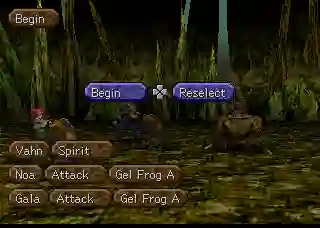
- 2. Engage and Negotiate Demons: Start an encounter by touching a Demon (on screen) and survive the surprise phase. Your turn allows Persona Skills or physical attacks selected via X. Recruit Demons to unlock new Personas—use the Contact menu (Circle when prompted) to choose talking tones for specific benefits.
- 3. Manage Your Magical Assets & Rumors: After battles in the Velvet Room, fuse personas and assign powerful combo skills you obtained through demon negotiations. Then, go to city phone booths (Tatsuya's Scenario) to actively spread or deny wild rumors that literally reshape the shops, story outcomes, and summonable demons in-game.
Source Context
Persona 2 - Eternal Punishment is cataloged as a PlayStation entry. The PlayStation context helps distinguish this entry from nearby ports, revisions, or arcade versions. The current tags are RPG, Strategy, Fantasy, PlayStation, CD-ROM, which help group the page with similar games without relying on a single generic label.
Play FAQ
Do I need to play Innocent Sin first?
It is highly recommended to fully appreciate the returning characters and the consequences shaping this story, but this sequel is largely self-contained, and the story introduction catches new players up enough to start this detective story.
What's different from Persona 2: Innocent Sin?
You play as a different protagonist (Maya) alongside an adult cast; combat is re-balanced with fewer guaranteed spells. Crucially, Innocent Sin used Major Arcana Personas, but Eternal Punishment introduces Minor Arcana Personas; Innocent Sin's fusion of Ultimate Persona to defeat Final Boss is replaced by a completely different ultimate battle mechanic.
How does the rumor system work?
While talking to characters in the city, keep a mental list of potential myths and rumors. By accessing specific phone booths, you gain the option to pay money to "spread" or "disperse" a rumor into a powerful psychic force—this instantly and globally overwrites reality (dungeon designs become different, shops carry certain weapons, and special bosses start appearing).